11 On the way to Jerusalem, Jesus traveled along the border between Samaria and Galilee. 12 As he entered a village, ten men with skin diseases approached him. Keeping their distance from him, 13 they raised their voices and said, “Jesus, Master, show us mercy!”
Luke 17:11-19 (CEB)
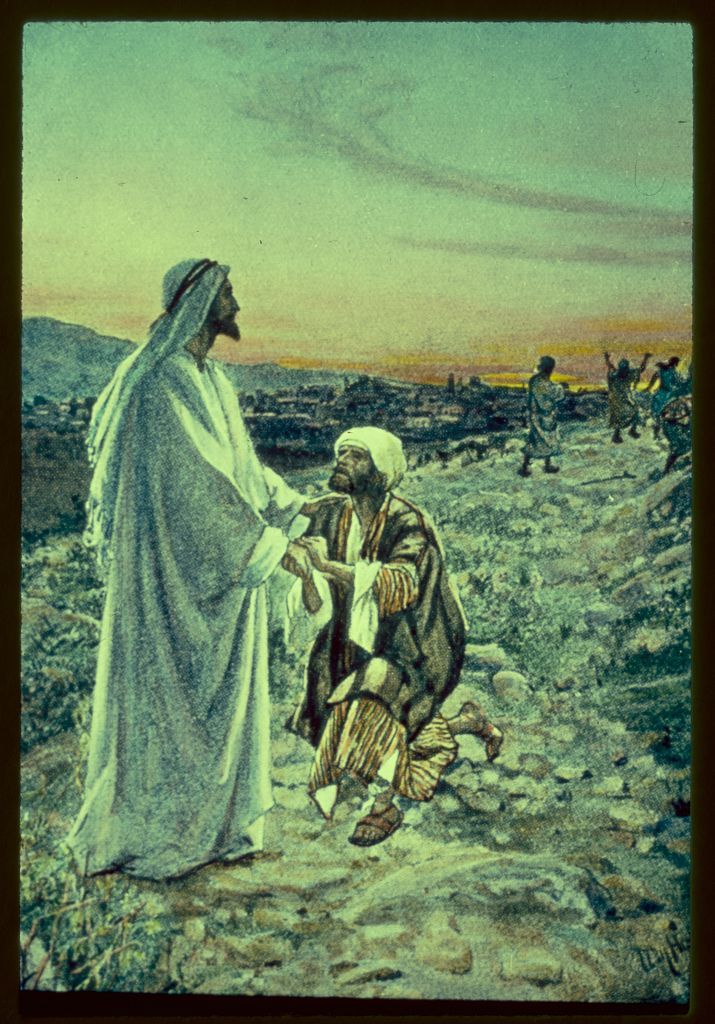
14 When Jesus saw them, he said, “Go, show yourselves to the priests.” As they left, they were cleansed. 15 One of them, when he saw that he had been healed, returned and praised God with a loud voice. 16 He fell on his face at Jesus’ feet and thanked him. He was a Samaritan. 17 Jesus replied, “Weren’t ten cleansed? Where are the other nine? 18 No one returned to praise God except this foreigner?” 19 Then Jesus said to him, “Get up and go. Your faith has healed you.”
In this text, Luke tells the story of how Jesus healed ten men of leprosy. The focus of this story is often on the fact that, out of all ten of those men, only one man came back to Jesus to give thanks for the healing and grace he received. We often consider the fact that this man was described as a “stranger” in the KJV and as a “foreigner” in more recent translations. He was a Samaritan, someone who would have been considered unclean. Luke does not tell us the ethnicity of the other nine men. It is possible that some of them were Samaritans, while others were Galileans.
All of that is interesting, but what interests me most about this text is in verse 11: “On the way to Jerusalem, Jesus traveled along the border between Samaria and Galilee.” Jesus probably could have travelled through different areas on his way to Jerusalem. Luke makes it a point to tell his readers that Jesus traveled “along the border” between these two regions, suggesting that Jesus deliberately chose this particular route over other possible routes to Jerusalem. Because Jesus chose to travel along the border, he was in a position to encounter people from both regions. Even on his way to his eventual betrayal, arrest, conviction, torture and crucifixion, Jesus chose to travel along the border, to encounter and heal along the way those whom he would soon suffer and die for. These people, who held animosity between each other for various reasons, all found healing together in the Christ.
There is a lot going on in this story, but one thing that stands out is the call upon us as disciples to travel along the border with Jesus to bring hope and healing to all who would come and receive it. The risen Christ still travels along the borders of our relationships with each other, seeking to heal our brokenness and unite us in fellowship one with another.
May we travel along the border with Jesus, in this liminal space, this in-between, and experience healing, joy, and freedom together as whole persons in Jesus Christ our Lord.
 First United Methodist Church