Sticking Out Like A Sore Thumb

In those days, John the Baptist appeared in the wilderness of Judea, proclaiming, “Repent, for the kingdom of heaven has come near.”

This is the one of whom the prophet Isaiah spoke when he said, “The voice of one crying out in the wilderness: ‘Prepare the way of the Lord, make his paths straight.'”

Now John wore clothing of camel’s hair with a leather belt around his waist, and his food was locusts and wild honey. Then the people of Jerusalem and all Judea were going out to him, and all the region along the Jordan, and they were baptized by him in the river Jordan, confessing their sins.

But when he saw many Pharisees and Sadducees coming for baptism, he said to them, “You brood of vipers! Who warned you to flee from the wrath to come? Bear fruit worthy of repentance. Do not presume to say to yourselves, ‘We have Abraham as our ancestor’; for I tell you, God is able from these stones to raise up children to Abraham. Even now the ax is lying at the root of the trees; every tree therefore that does not bear good fruit is cut down and thrown into the fire.

“I baptize you with water for repentance, but one who is more powerful than I is coming after me; I am not worthy to carry his sandals. He will baptize you with the Holy Spirit and fire.”

Matthew 3:1-11 (NRSV)

This is the first blog update in a few weeks because of my inability to login and access the website. Thankfully, we have that fixed and now I can get back to regular weekly updates.

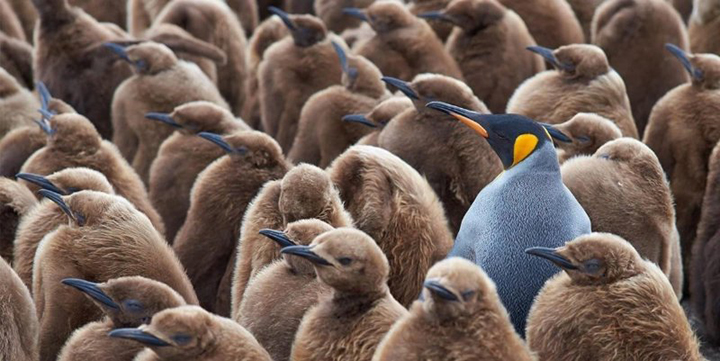
By the standards of people in first century Judea, John the Baptist was a weirdo. He stuck out like a sore thumb. I don’t know the exact origins of the idiom “stick out like a sore thumb,” but it usually is used to describe something that is clearly out of place and does not match its surroundings. John the Baptist certainly fit that description. He did not seem concerned with making himself look like other people. He did not seem concerned with acting like other people. Instead, he was focused on his mission to “prepare the way of the Lord.”

When the Pharisees and Sadducees showed up, he did not cut them any slack. He called them a “brood of vipers” (think “den of snakes”) and proceeded to tell them how the cow ate the cabbage, so to speak. John the Baptist doesn’t sound like the shining example of how to win friends and influence people, yet people from all over the countryside were coming to him for baptism in the Jordan.

What was his secret? Well, he was following God’s calling on his life for one thing. Another thing is that he was singularly focused on his mission. One of the most important things about John the Baptist though is that he was not afraid to just be himself.

He wasn’t weird just because of what he wore as clothing or what he ate as food. John was weird because, in a world of so many people who were so concerned with keeping up appearances, John just went along being his authentic self.

How often do we just allow ourselves to be our authentic selves? What kind of pressures do we face in life to present ourselves in a certain way? Who has God created us to be and how are we reflecting that to the world?

There is an old movie from the 80’s called “The Breakfast Club.” I’m sure you’ve seen it. Some teenagers get stuck in detention together after school and the whole movie is about how they relate to each other and the trouble they get themselves, and each other, into before they are allowed to leave. Each character is unique, and each one presents to the other as her or his authentic self. Through doing so they gain new understandings of each other and are changed in ways that make them better people. When John the Baptist preached repentance, from the Greek word metanoia meaning “change of heart and life”, what if he was telling the people, at least in part, to stop pretending and just be who God created them to be? That’s what John was doing. That’s what Jesus did.

Let us go with the confidence of children of God and do the same. Amen.
New Creation

17 For I am about to create new heavens
and a new earth;
the former things shall not be remembered
or come to mind.
18 But be glad and rejoice forever
in what I am creating;
for I am about to create Jerusalem as a joy,
and its people as a delight.
19 I will rejoice in Jerusalem,
and delight in my people;
no more shall the sound of weeping be heard in it,
or the cry of distress.
20 No more shall there be in it
an infant that lives but a few days,
or an old person who does not live out a lifetime;
for one who dies at a hundred years will be considered a youth,
and one who falls short of a hundred will be considered accursed.
21 They shall build houses and inhabit them;
they shall plant vineyards and eat their fruit.
22 They shall not build and another inhabit;
they shall not plant and another eat;
for like the days of a tree shall the days of my people be,
and my chosen shall long enjoy the work of their hands.
23 They shall not labor in vain,
or bear children for calamity;
for they shall be offspring blessed by the LORD—
and their descendants as well.
24 Before they call I will answer,
while they are yet speaking I will hear.
25 The wolf and the lamb shall feed together,
the lion shall eat straw like the ox;
but the serpent—its food shall be dust!
They shall not hurt or destroy
on all my holy mountain,
says the LORD.

Isaiah 65:17-25

It might interest you to know that while writing this blog post I had a strange thing happen with my computer and I lost the entire post before I could publish it. So, let’s try this again!

We are drawing near to the beginning of the season of Advent, which is supposed to be a time of anticipation, expectation, and waiting. The question is: What exactly are we anticipating? What exactly are we expecting? What is it exactly that we are waiting for?

The first obvious answer is that we are waiting for the coming of the Messiah with great anticipation and expectation. That is the central hope of Advent. The coming Christ will save us from sin and death and afford us the great hope of resurrection and life everlasting.

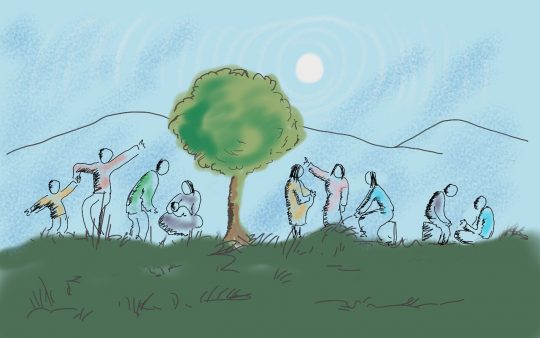
The second answer which we may not always think about is what Isaiah is talking about here. The coming Messiah will not just save us from our sins, but will usher the inbreaking of the kingdom of God into the world. It marks the beginning of God initiating a new act of creation. Isaiah refers to things that people experience in life, things that bring pain and suffering, and turns them completely upside down. This is what God is doing in this new creation: Turning this broken world upside down, rebuilding what has been destroyed, and recreating in us God’s image in which we were first created. Isaiah describes what this new creation will look like and how it will operate, which is completely the opposite of what we know.

So, not only are we waiting expectantly with great anticipation for the coming Christ, but we are also waiting, expecting, and anticipating with joy the new thing God is doing.

May we seek to be a part of that new creation not only during Advent, but every day that God has given us.

Along the Border

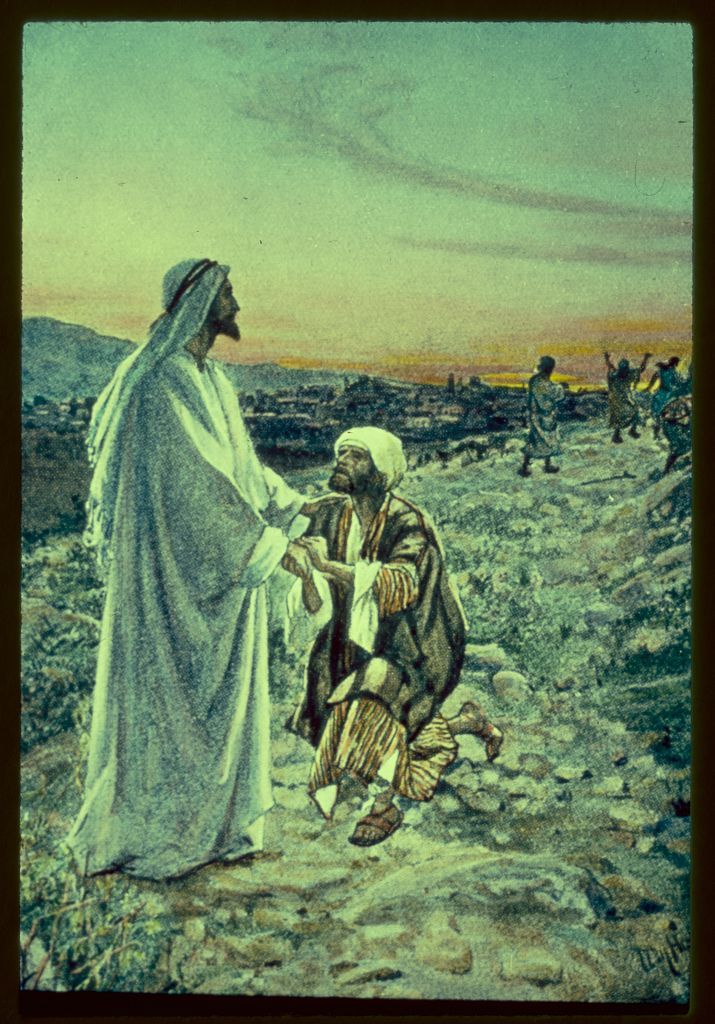
11 On the way to Jerusalem, Jesus traveled along the border between Samaria and Galilee. 12 As he entered a village, ten men with skin diseases approached him. Keeping their distance from him, 13 they raised their voices and said, “Jesus, Master, show us mercy!”
14 When Jesus saw them, he said, “Go, show yourselves to the priests.” As they left, they were cleansed. 15 One of them, when he saw that he had been healed, returned and praised God with a loud voice. 16 He fell on his face at Jesus’ feet and thanked him. He was a Samaritan. 17 Jesus replied, “Weren’t ten cleansed? Where are the other nine? 18 No one returned to praise God except this foreigner?” 19 Then Jesus said to him, “Get up and go. Your faith has healed you.”

Luke 17:11-19 (CEB)

In this text, Luke tells the story of how Jesus healed ten men of leprosy. The focus of this story is often on the fact that, out of all ten of those men, only one man came back to Jesus to give thanks for the healing and grace he received. We often consider the fact that this man was described as a “stranger” in the KJV and as a “foreigner” in more recent translations. He was a Samaritan, someone who would have been considered unclean. Luke does not tell us the ethnicity of the other nine men. It is possible that some of them were Samaritans, while others were Galileans.

All of that is interesting, but what interests me most about this text is in verse 11: “On the way to Jerusalem, Jesus traveled along the border between Samaria and Galilee.” Jesus probably could have travelled through different areas on his way to Jerusalem. Luke makes it a point to tell his readers that Jesus traveled “along the border” between these two regions, suggesting that Jesus deliberately chose this particular route over other possible routes to Jerusalem. Because Jesus chose to travel along the border, he was in a position to encounter people from both regions. Even on his way to his eventual betrayal, arrest, conviction, torture and crucifixion, Jesus chose to travel along the border, to encounter and heal along the way those whom he would soon suffer and die for. These people, who held animosity between each other for various reasons, all found healing together in the Christ.

There is a lot going on in this story, but one thing that stands out is the call upon us as disciples to travel along the border with Jesus to bring hope and healing to all who would come and receive it. The risen Christ still travels along the borders of our relationships with each other, seeking to heal our brokenness and unite us in fellowship one with another.

May we travel along the border with Jesus, in this liminal space, this in-between, and experience healing, joy, and freedom together as whole persons in Jesus Christ our Lord.